
Receiving a diagnosis of cerebral palsy for your child can feel overwhelming. You might be grappling with many questions: What does this mean for their future? What therapies are available? How can we ensure they have the best possible quality of life?
We understand these concerns deeply. Seeing your child face medical challenges is incredibly difficult, and finding the right path for their care can feel like a journey through uncharted territory. Our mission at Victory by Vivian is to stand with families just like yours, offering practical help, emotional support, and lasting hope as you navigate these complex medical crises. We believe no child should fight alone, and no parent should feel isolated on this path. We’re here to walk with families, offering guidance every step of the way, just as we offer insights on topics like how to advocate for your child in the hospital.
What Exactly Is Cerebral Palsy?
Cerebral palsy (CP) is a group of permanent movement disorders that appear in early childhood. It’s caused by abnormal brain development or damage to the developing brain, often before birth, during birth, or shortly after. CP primarily affects body movement, muscle tone, posture, and coordination, but the severity and specific symptoms can vary widely among individuals.
The condition isn’t progressive, meaning it doesn’t worsen over time, but its effects on the body can change as a child grows. According to the Centers for Disease Control and Prevention (CDC), cerebral palsy is the most common motor disability in childhood. We’ve seen firsthand how a child’s unique diagnosis requires a personalized approach to support and care.
Cerebral Palsy Early Intervention
Early intervention for cerebral palsy focuses on beginning therapies as soon as a diagnosis is suspected or confirmed. This proactive approach helps children develop motor skills, cognitive abilities, and independence, often leading to better long-term outcomes by capitalizing on brain plasticity during critical developmental periods.
Starting early can make a significant difference. The developing brain has an incredible capacity for adaptation, a concept known as neuroplasticity. When therapies begin in infancy or toddlerhood, children can often learn compensatory strategies and strengthen unaffected neural pathways, mitigating some of the condition’s effects. Our work with Viv’s Kids has reinforced that providing support at the earliest stages helps families set a strong foundation for their child’s development.
Physical Therapy Interventions for Cerebral Palsy
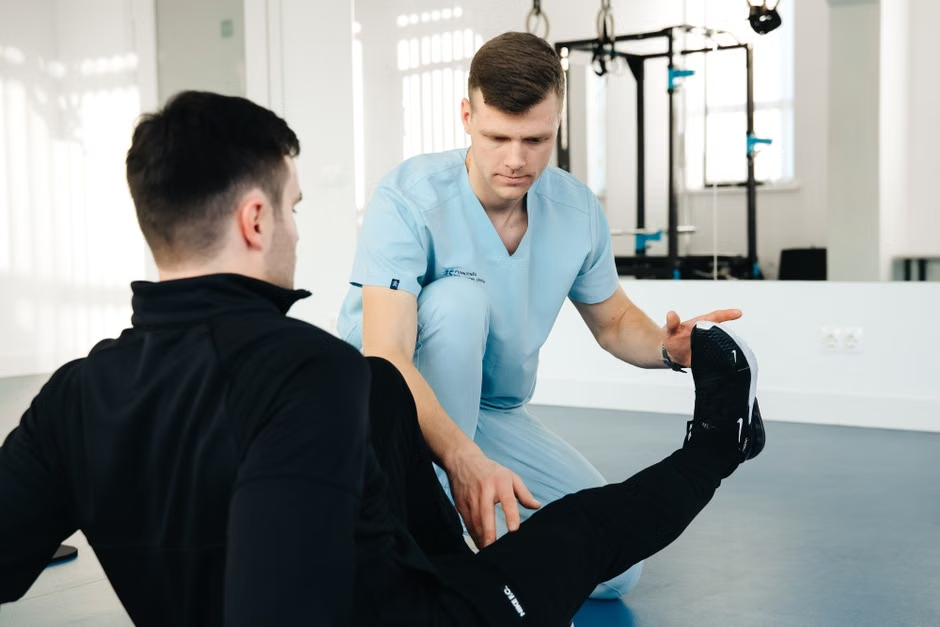
Physical therapy (PT) for children with cerebral palsy aims to improve movement, strength, flexibility, balance, and posture through targeted exercises and activities. PT helps maximize a child’s physical independence, prevent secondary complications like contractures, and enhance their overall functional abilities in daily life.
For many children with CP, physical therapy becomes a cornerstone of their care plan. PT might include stretching exercises to prevent muscle shortening, strengthening activities to build muscle power, balance training to improve stability, and gait training to help with walking patterns. Therapists often use play-based activities to keep children engaged and motivated. This isn’t just about movement; it’s about empowering a child to interact more fully with their world.
“Physical therapy plays a vital role in managing cerebral palsy by improving motor function, preventing deformities, and enhancing quality of life for affected individuals. Consistent and tailored interventions are key to achieving optimal outcomes.”
— National Institute of Neurological Disorders and Stroke (NINDS)
What to Look For: Signs and Therapy Goals
Recognizing the signs of cerebral palsy and understanding what therapy aims to achieve can help parents advocate for their child. You might notice:
- Stiff muscles and exaggerated reflexes (spasticity)
- Lack of coordination and balance (ataxia)
- Tremors or involuntary movements (dyskinesia)
- Difficulties with fine motor skills like grasping or writing
- Challenges with walking or maintaining posture
- Delays in reaching motor milestones like sitting up, crawling, or walking
Physical therapy goals are always individualized but often include increasing range of motion, improving muscle strength, enhancing balance and coordination, facilitating mobility (walking, wheelchair use), and reducing pain or discomfort associated with muscle tightness. We work with families to understand these goals and support their child’s progress, often alongside conditions such as prematurity and bronchopulmonary dysplasia, which can sometimes be related.
Occupational Therapy Interventions for Spastic Cerebral Palsy
Occupational therapy (OT) helps children with spastic cerebral palsy develop the skills they need for daily living, focusing on fine motor tasks, self-care, and participation in school and play activities. For spastic CP, OT specifically addresses muscle stiffness and weakness to improve functional independence in meaningful occupations.
Spasticity, characterized by stiff, tight muscles, is the most common type of cerebral palsy. It can make everyday tasks incredibly challenging. Occupational therapists use various techniques to help children manage spasticity and improve their functional abilities. This might involve adapting activities, providing specialized equipment, or teaching new ways to accomplish tasks like dressing, eating, or writing. The goal is to maximize a child’s ability to participate in the “occupations” of childhood.
“Occupational therapy helps individuals with cerebral palsy adapt to their environment and engage in daily activities. This includes improving fine motor skills, addressing sensory processing issues, and recommending assistive devices to enhance independence.”
In our experience, tailored OT plans are crucial. For example, a child struggling to hold a pencil might work on hand strength and coordination, or they might use adaptive grips. For self-feeding, they might learn to use specialized utensils. OT looks at the whole child and their environment, aiming to remove barriers to participation and joy. Sometimes, the emotional toll on parents can be significant, which is why we also share resources like warning signs and prevention strategies for burnout in medical parents.
Considering Suitability: Exploring All Avenues
While physical and occupational therapies are foundational, they’re not the only interventions available, nor are they always suitable in isolation. The best approach for your child’s cerebral palsy is a holistic one, often involving a team of specialists. This team might include speech therapists for communication or feeding difficulties, behavioral therapists (like those using CBT techniques) to address emotional or coping challenges, and even recreational therapists to explore adaptive sports and play.
For some children, medication might be used to reduce spasticity, or surgical interventions could be considered to improve movement or correct deformities. It’s important to remember that every child’s journey with CP is unique. What works wonderfully for one family might not be the right fit for another. In Ohio, families might also explore programs like the Children with Medical Handicaps Program (CMH), which can help with services and support for children with special healthcare needs. It’s about building a comprehensive support system tailored to your child’s specific needs and strengths.
Newest Treatment for Cerebral Palsy: Realistic Expectations
The field of cerebral palsy treatment is constantly evolving, with researchers exploring exciting avenues. These include advanced robotic-assisted gait training, virtual reality therapy for motor skills, and novel medication delivery systems. There’s also ongoing research into stem cell therapies, though these are largely experimental and not yet standard practice.
While these newer treatments offer significant promise, it’s important for families to have realistic expectations. Many of these approaches are still in clinical trials or are considered supplementary to established therapies. The focus remains on maximizing function and quality of life through proven methods, augmented by emerging science when appropriate and safe. We’re here to help families stay informed and make empowered decisions about their child’s care.
Practical Tips for Supporting Your Child with Cerebral Palsy
Living with cerebral palsy presents daily challenges, but there are many ways parents can provide support and empower their child. Here are some practical tips that families we’ve worked with have found helpful:
- **Embrace Consistency with Therapy:** Regular attendance and consistent practice of exercises at home can significantly reinforce progress made in therapy sessions. It’s often a long game, and persistence pays off.
- **Create an Accessible Home Environment:** Simple modifications like grab bars, ramps, or adjusting furniture height can make a huge difference in your child’s independence and safety.
- **Foster Independence:** Encourage your child to do as much as they can for themselves, even if it takes longer. This builds confidence and self-efficacy.
- **Connect with Other Families:** Finding a community of parents navigating similar challenges can provide invaluable emotional support, shared experiences, and practical advice. Michael Clain and Danny Burns, our founders, built Victory by Vivian on this principle of community.
- **Prioritize Self-Care:** Caring for a child with special needs is demanding. Make sure you’re also taking time for your own mental and physical well-being.
- **Stay Informed and Advocate:** Continuously learn about CP, new treatments, and your child’s specific needs. Don’t hesitate to ask questions and advocate for the best care and resources available, including those found in guides like our tips for NICU admission: what parents need to know their first days if prematurity was a factor.
The journey with cerebral palsy is a marathon, not a sprint. At Victory by Vivian, we believe in the strength of families and the resilience of children. We are where families are required the most, offering compassion and empathy, reminding you that your journey doesn’t have to be walked alone. We strive to make the burden on parents less, enabling you to concentrate on your child and helping your family carry your cross with hope and support.